


Ideas Worth Exploring
Inspirations is a collection of thinkers, practitioners and industry voices whose ideas we find genuinely valuable.
They are featured not because we agree with everything they say, but because they challenge assumptions around ITSM complexity, SaaS business models, operational simplicity, customer experience, enterprise workflows and service management beyond IT.
These conversations reflect many of the issues organisations are grappling with today: rising platform complexity, increasing operational overhead, workflow friction, SaaS cost expansion and the need to deliver greater value with less complexity.
At Conversant ESM, we believe modern service management should simplify operations, improve visibility and reduce complexity over time—not continuously add to it.
Whether you are leading IT, extending service management across the enterprise or exploring the opportunities created by AI, the aim of Inspirations is simple: to share ideas that inform, challenge and inspire.
Partnership Shouldn't Be a Sales Strategy
We believe the strongest customer relationships are built, not engineered.
The phrase "land and expand" has become commonplace in enterprise software, yet it can encourage the wrong behaviour. The best partnerships don't grow because a vendor follows a playbook; they grow because customers see ongoing value, trust the relationship and choose to deepen it.
The post below offers a thoughtful perspective on why the language we use matters—and why partnership should always come before pipeline.
Good Partnerships Don't Rely on Manufactured Urgency
The strongest supplier relationships are built on trust, transparency and mutual value. They shouldn't depend on artificial deadlines or commercial pressure.
This post explores a familiar pattern in enterprise software: renewal conversations driven by quarter-end targets rather than customer needs. It asks an important question: if a deal only exists because the clock is ticking, whose interests is it really serving?
It's a timely reminder that long-term partnerships are built through confidence and outcomes—not manufactured urgency.
ITIL 5: Is Evolution Enough?
Service management is evolving rapidly, driven by AI, enterprise-wide services and changing business expectations. The question is whether the frameworks that have guided the industry for decades are evolving quickly enough to keep pace.
In this thought-provoking article, our partner Mozaic explores whether ITIL 5 represents the next natural step or whether organisations need to think beyond traditional frameworks to unlock the full potential of modern service management. It is a valuable perspective for anyone leading service transformation or shaping the future operating model of their organisation.
Recommended reading: ITIL 5: Is Evolution Enough? by our partner Mozaic.
Read the full article →
The Organisation of the Future Starts with the Operating Model
There is no shortage of AI headlines. What is in short supply is practical guidance on how organisations should adapt to take advantage of it.
This excellent paper from our strategic partner, Mozaic, argues that the biggest challenge is not choosing the right AI tools, but redesigning the operating model that sits behind them. Processes, governance, data, people and organisational structures all need to evolve if AI is to deliver lasting business value rather than a collection of disconnected pilots.
Recommended reading: The Organisation of the Future: The Tipping Point by our partner Mozaic.
Read the full article →
Rethinking the economics of SaaS
This raises an interesting challenge to one of the most accepted assumptions in enterprise software: that SaaS pricing should continually increase over time.
Particularly interesting is the argument that modern cloud infrastructure, platform efficiency, and product-led growth models should in many cases be reducing delivery costs rather than increasing them. The post also highlights a broader shift towards simpler pricing, lower operational overhead, and a closer alignment between customer value and long-term platform economics.
The Foundations of Modern Service Management
Every organisation wants to embrace AI, automation and better digital experiences. But lasting success doesn't come from chasing the latest technology. It comes from building on strong service management foundations.
In this insightful article, independent service management expert Barclay Rae explains why real transformation comes from combining proven core practices with new sources of value, supported by the right people, governance and culture. It is a compelling reminder that technology is only one part of successful service transformation.
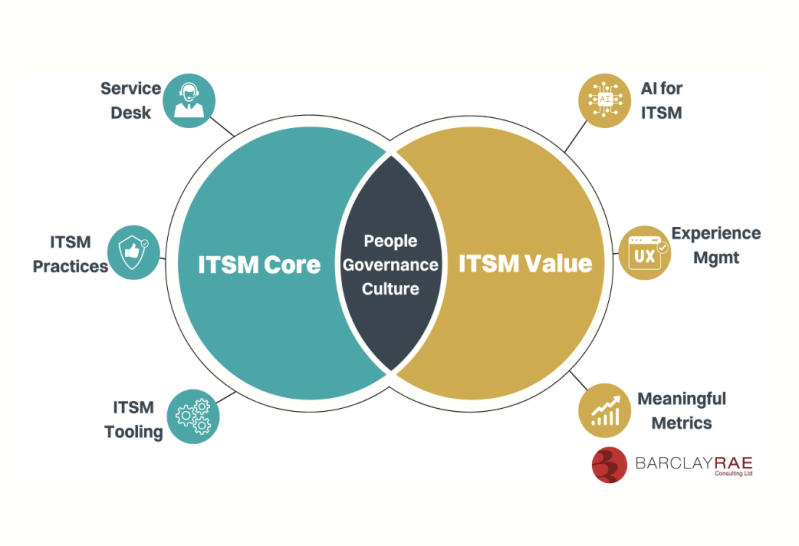
Recommended reading: Core to Value for Service Management Success by Barclay Rae.
Read the full article →
When Complexity Becomes the Operating Model
One of the recurring patterns in service management is the assumption that the next platform, module or AI capability will somehow resolve deeper operational problems.
In reality, many organisations are carrying complexity, unclear ownership, poor workflows or simply too much process friction — and a new tool often just automates the problem.
A thoughtful piece from Stephen Mann and Barclay Rae on why “new” doesn’t automatically mean “better”, and why clarity of operating model matters far more than feature lists.
Recommended reading: You Probably Don't Need a New ITSM Tool by Barclay Rae.
Read the full article →
The Software Doesn't Change Overnight. The Sales Target Does
This post resonated with us because it exposes a reality that many buyers recognise. Enterprise software doesn't suddenly become more valuable because it's the last day of the quarter. More often, the urgency reflects a sales target rather than a change in the product.
We believe organisations should buy when they're ready, based on business need, value and confidence in the solution—not because a commercial deadline has been manufactured. It's a refreshingly honest perspective and one that's well worth reading.